How I Prepared for Life’s Surprises — A Real Talk on Financial Safety Nets
Accidents happen when we least expect them. One moment you're fine, the next, you're facing bills, lost income, or costly repairs. I learned this the hard way. After a sudden medical emergency derailed my finances, I started building systems to protect myself — not just survive, but stay on track. This is my journey through creating a solid financial backup plan, using practical steps that actually work. No hype, just real strategies for real life. The experience taught me that budgeting and saving are important, but they’re not enough. What matters more is how prepared you are when things go wrong. Financial safety isn’t about predicting the future — it’s about being ready for it.
The Wake-Up Call: When Life Throws a Curveball
It started with a fall — nothing dramatic, just a misstep on a wet kitchen floor. But the aftermath was anything but minor. A fractured wrist led to surgery, then weeks off work, and a growing pile of medical bills. At first, I thought I could manage. I had some savings, a steady job, and health insurance. But within two months, I had drained nearly all my savings, fallen behind on household expenses, and started worrying about how I’d cover the mortgage. The emotional toll was just as heavy as the financial strain. I felt helpless, frustrated, and embarrassed. I had always considered myself responsible with money, yet one unexpected event had pushed me to the edge.
This experience was my wake-up call. I realized that life doesn’t wait for perfect timing. Crises don’t come with warnings, and they don’t care how well you’ve been managing your finances up to that point. What I had mistaken for financial stability was actually just temporary balance — a surface-level sense of control that cracked the moment real pressure arrived. The truth is, many people are one incident away from financial disruption. A car accident, a sudden job loss, or a family illness can unravel months or even years of careful planning. My situation wasn’t unique, and that’s what made it so revealing. It showed me that traditional financial advice — save more, spend less — doesn’t go far enough. What’s missing is a system designed specifically for the unexpected.
That’s when I began to shift my thinking. Instead of focusing only on growing wealth, I started asking how to protect it. I wanted to know what safeguards existed, what I had overlooked, and what I could put in place to prevent a similar crisis from derailing me again. I began researching, talking to financial advisors, and reviewing my own habits. What emerged wasn’t a complicated investment strategy or a high-risk solution, but something far more practical: a layered financial safety net. This isn’t about fear or pessimism — it’s about responsibility. It’s understanding that while we can’t control life’s surprises, we can control how we respond to them.
What Is a Financial Safety Net — And Why It’s Not Just an Emergency Fund
When most people think of financial protection, they think of an emergency fund. And while that’s a critical piece, it’s only one part of a broader safety net. A true financial safety net is a collection of tools and strategies designed to keep you stable when income is interrupted or unexpected costs arise. It includes emergency savings, insurance policies, accessible credit, and income protection plans. Each layer serves a different purpose, but together, they create a system that’s far more resilient than savings alone. Relying only on a cash cushion is like building a house with only a front door — it might work in ideal conditions, but it won’t hold up when the storm hits.
The emergency fund is the foundation. It’s meant to cover three to six months of essential living expenses — rent, utilities, groceries, transportation — in case of job loss or short-term disability. But even a well-funded account can’t cover everything. What happens if a medical issue requires long-term care? Or if your home suffers major damage? That’s where insurance comes in. Health, disability, auto, and property insurance act as force multipliers, absorbing large costs that would otherwise deplete your savings. For example, a single hospital stay can cost tens of thousands of dollars — an amount no emergency fund should be expected to cover. Insurance ensures that these major risks don’t become personal financial disasters.
Then there’s accessible credit. While no one should rely on debt, having a low-interest personal line of credit or a well-managed credit card can provide immediate liquidity when cash isn’t available. This isn’t about spending — it’s about timing. Payments from insurance or disability benefits can take weeks to process. In the meantime, you still need to pay bills. A credit buffer gives you breathing room without forcing you to liquidate investments at a loss or skip payments. Finally, income protection ensures that money continues to come in even when you can’t work. This might include employer-sponsored disability plans, personal disability insurance, or even a side income stream you can activate quickly. Together, these elements form a comprehensive defense system — not just against poverty, but against instability.
Building Your Emergency Fund — Smarter, Not Harder
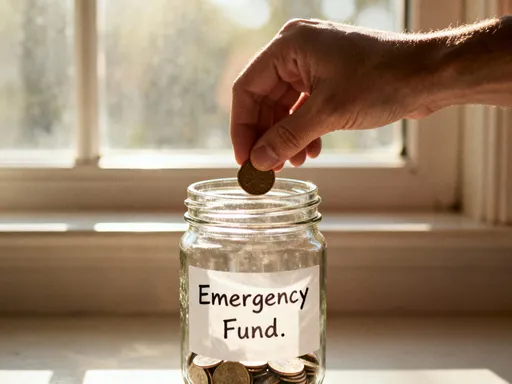
Creating an emergency fund doesn’t require a high income — it requires consistency and smart planning. The key is to treat it like a non-negotiable expense, just like your rent or electricity bill. Start small if you must. Even $25 per week adds up to over $1,300 in a year. The goal isn’t perfection; it’s progress. Many people delay starting because they think they need to save $10,000 all at once. But financial resilience is built over time, not overnight. The most effective emergency funds are funded automatically, so you don’t have to rely on willpower. Setting up a direct transfer from your paycheck to a dedicated savings account removes the temptation to spend that money elsewhere.
Where you keep the money matters just as much as how much you save. Your emergency fund should be in a safe, liquid account — one that’s protected by federal insurance and allows quick access when needed. High-yield savings accounts are ideal because they offer better interest rates than traditional banks while keeping your money available. Avoid putting emergency funds in long-term investments like stocks or retirement accounts. These may grow faster, but they come with market risk and withdrawal penalties that make them unreliable in a crisis. The purpose of this fund is stability, not growth. You’re not trying to get rich — you’re trying to stay afloat.
How much is enough? A common guideline is three to six months of essential expenses. If your monthly essentials total $3,000, aim for $9,000 to $18,000. But this number should be personalized. If your job is less stable or you’re the sole provider, leaning toward six months or more makes sense. On the other hand, if you have multiple income sources or strong family support, three months might be sufficient. The goal is to cover basic needs without overfunding to the point where money sits idle. Once you reach your target, pause contributions and redirect that money toward other goals — like debt reduction or retirement — while maintaining the balance as a standing reserve.
Behavioral strategies also play a crucial role. Give your fund a clear purpose — name it something like “Life Happens Fund” or “Peace of Mind Account.” This mental framing helps you resist dipping into it for non-emergencies. Track your progress monthly, and celebrate milestones. Seeing the number grow reinforces positive habits. And if you do have to use the fund, don’t panic. Rebuilding it should be your next priority, but the fact that it was there when you needed it is proof the system works. The real success isn’t a number — it’s the confidence that comes from knowing you’re prepared.
Insurance: The Silent Guardian of Your Returns
Insurance is often misunderstood. Many see it as an expense with no return — money paid out that they hope to never use. But this view misses the bigger picture. Insurance isn’t about return on investment in the traditional sense; it’s about risk transfer. It ensures that a single catastrophic event doesn’t wipe out years of financial progress. When you pay premiums, you’re not losing money — you’re purchasing protection. And in financial terms, that protection is one of the highest-value tools available. Consider this: a $200 monthly health insurance premium might prevent a $50,000 hospital bill. That’s not an expense — that’s a guaranteed return on protection.
The right policies act as a shield for your wealth. Health insurance covers medical costs, but it’s only the beginning. Disability insurance is equally important, especially for those who rely on their ability to work. If an injury or illness prevents you from earning income, disability insurance replaces a portion of your paycheck — typically 50% to 60% — for a set period. Without it, even a well-funded emergency account can run dry in months. Auto and property insurance protect your assets from sudden loss or damage. These policies don’t make your car or home more valuable — they prevent their loss from making you financially vulnerable.
Yet many people operate with critical gaps in coverage. They might have health insurance through work but no disability plan. They might carry auto insurance but underestimate the cost of home repairs after a storm. Others assume their employer’s benefits are enough, only to discover limitations when they file a claim. The solution is to review your policies annually and ask specific questions: What does this cover? What are the exclusions? Is the payout sufficient for my current lifestyle? For example, a disability policy that only pays $2,000 a month might not cover your expenses if you earn $5,000. Tailoring your coverage to your actual needs ensures that protection keeps pace with your life.
Shopping for insurance doesn’t have to be overwhelming. Focus on value, not just cost. A slightly higher premium with better coverage is often smarter than a cheap plan with loopholes. Work with licensed agents, compare quotes, and read the fine print. Group plans through employers or professional associations can offer discounted rates. And don’t forget about life insurance if you have dependents — it’s not about you, it’s about ensuring your family isn’t burdened by debt or lost income if something happens. Insurance isn’t glamorous, but it’s foundational. It’s the quiet safeguard that allows you to take smart financial risks elsewhere, knowing you’re not building on sand.
Access & Liquidity: Why Availability Matters More Than Size
It doesn’t matter how much money you have if you can’t get to it when you need it. Liquidity — the ease with which assets can be converted to cash — is a critical but often overlooked part of financial safety. Retirement accounts like 401(k)s and IRAs grow over time, but they come with restrictions. Early withdrawals trigger penalties and taxes, making them impractical in a true emergency. Similarly, money tied up in real estate or long-term investments can’t help you pay next month’s rent. A financial safety net only works if the resources are accessible on short notice, without financial penalty.
That’s why your emergency fund should be in a liquid account — one that allows instant or near-instant access. High-yield savings accounts, money market accounts, and certain checking accounts offer this flexibility. They’re federally insured, so your money is protected, and they allow transfers or withdrawals within days, sometimes instantly. Compare this to a certificate of deposit (CD), which locks your money for a set term. While CDs offer slightly higher interest, they penalize early withdrawal — a feature that defeats the purpose of emergency access. The small return isn’t worth the loss of flexibility.
Accessible credit is another layer of liquidity. A personal line of credit with a low interest rate can serve as a financial bridge when cash flow is interrupted. Unlike credit cards, which often carry high rates, a personal line can offer fixed, reasonable terms. The key is to have it in place before you need it. Applying during a crisis is risky — lenders may deny you based on income changes or credit stress. Having pre-approved access means you can act quickly without added pressure. But this isn’t a license to spend. The goal is to use it sparingly, pay it back promptly, and keep it as a backup, not a primary funding source.
Liquidity also means having a clear plan for accessing funds. Know which accounts to tap first, how long transfers take, and what documentation you might need. Keep emergency contact numbers and login details in a secure but accessible place. If you’re married or have a partner, ensure they know where everything is and how to act if you’re unable to. Financial preparedness isn’t just about money — it’s about systems. When a crisis hits, decision-making becomes harder. The more you’ve planned in advance, the smoother the response. Liquidity isn’t about having the most money — it’s about having the right money, at the right time, in the right place.
Income Protection: Securing Cash Flow When You Can’t Work
When an accident or illness prevents you from working, the loss of income is often more damaging than the medical costs. Bills don’t stop just because your paycheck does. This is why preserving cash flow is just as important as cutting expenses. Income protection ensures that money continues to come in, even during forced downtime. The most direct way is through disability insurance, which pays a percentage of your income if you’re unable to work due to injury or illness. While some employers offer short-term or long-term disability plans, the coverage is often limited. Personal disability insurance can fill those gaps, providing more comprehensive protection tailored to your needs.
But insurance isn’t the only way to protect income. Building a side-income capability in advance can be a powerful backup. This doesn’t mean launching a full-time business — it means identifying skills or assets you can monetize quickly. Could you offer consulting, tutoring, or freelance work in your field? Do you have a car you could use for delivery services? Even a small secondary income stream can make a difference when primary earnings stop. The key is preparation. Have your tools ready, your profiles set up, and your network informed so you can activate this option fast. Think of it as a financial spare tire — you hope never to use it, but you’re glad it’s there.
Understanding your workplace benefits is another critical step. Does your job offer paid sick leave? How much? Is there a short-term disability program, and what’s the waiting period? Some plans have a 30-day elimination period, meaning you won’t receive benefits until a month after you stop working. That’s where your emergency fund comes in — it bridges the gap until disability payments begin. Reviewing these details ahead of time allows you to plan accordingly. You might decide to save more during the year to cover that waiting period, or you might choose to supplement with a personal policy that has a shorter delay.
The goal is to create a “backup income playbook” — a clear plan for how you’ll generate money if your main source disappears. This might include a list of potential gigs, contact information for freelance platforms, or even a simple budget adjustment strategy, like temporarily reducing discretionary spending. The more specific the plan, the less stress you’ll face in the moment. Financial resilience isn’t just about having resources — it’s about knowing how to use them. When income stops, panic sets in. But with a plan, you can respond with clarity, not fear.
Putting It All Together: A Comprehensive Plan That Works
Imagine Sarah, a 42-year-old office manager and single mother. She has a solid job, a modest savings account, and health insurance through work. One day, she slips on ice and breaks her ankle. The injury requires surgery and eight weeks off work. Without a plan, this could be devastating. But Sarah has prepared. She has a $12,000 emergency fund in a high-yield savings account, covering four months of essential expenses. She files for short-term disability through her employer, which will replace 60% of her income after a two-week waiting period. She uses her emergency fund to cover the gap and her immediate bills.
Her health insurance covers most of the surgery costs, though she still faces a $1,500 deductible. She pays this from her emergency fund, knowing it’s a qualified expense. She also has a pre-approved personal line of credit in case of further complications, though she doesn’t need to use it. To supplement income, she starts offering virtual administrative support to small businesses — a skill she’s developed over the years. It’s not full-time, but it brings in an extra $300 a month. She reviews her insurance policies annually, so she knows exactly what’s covered and what isn’t. She keeps digital copies of all financial documents in a secure cloud folder, accessible to her sister in case of emergency.
Sarah’s story isn’t about perfection — it’s about preparedness. She didn’t avoid hardship, but she avoided financial collapse. Each layer of her safety net played a role: savings provided immediate liquidity, insurance prevented wealth erosion, accessible credit offered backup, and income protection maintained cash flow. This is what a comprehensive plan looks like in action. It’s not one big solution — it’s several small, well-coordinated ones.
Maintaining this system requires regular review. Life changes — jobs, family size, health, income — and your safety net should adapt. Experts recommend reviewing your plan at least once a year or after any major life event. Update your emergency fund target as expenses rise. Reassess insurance coverage when you move, buy a home, or have a child. Test your access to funds — try a small transfer to ensure your accounts are working. The goal isn’t to live in fear of disaster, but to build quiet confidence that you can handle it.
Peace of Mind Is the Real Return
Financial preparedness isn’t about avoiding risk altogether — that’s impossible. It’s about managing risk wisely so you can live with confidence, not anxiety. The real return on building a safety net isn’t measured in dollars saved, but in peace of mind gained. It’s the ability to face an unexpected bill, a medical setback, or a job loss without panic. It’s knowing that one incident won’t undo years of hard work. This kind of security doesn’t come from luck — it comes from planning.
True financial health includes both growth and protection. You can invest for the future, save for goals, and build wealth — but only if you have a foundation that won’t crack under pressure. A safety net doesn’t guarantee a perfect life, but it ensures that when life goes off track, you have the tools to get back on. It shifts your mindset from survival to stability. You’re no longer reacting to crises — you’re prepared for them.
Starting is easier than you think. Pick one step: open a separate savings account, review your insurance, or research disability coverage. Small actions build momentum. Over time, these choices add up to real resilience. You don’t need to do everything at once. You just need to begin. Because the best time to prepare for life’s surprises was years ago. The second-best time is now.