You Won’t Believe What Shopping in Nicosia’s Old Streets Feels Like
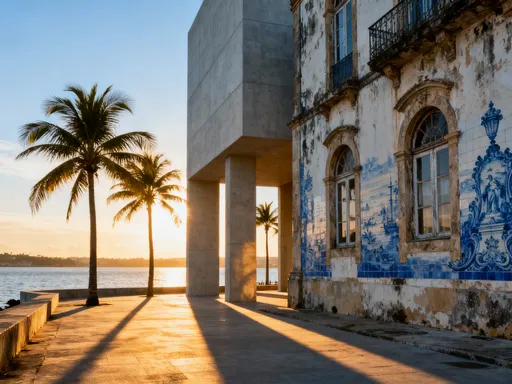
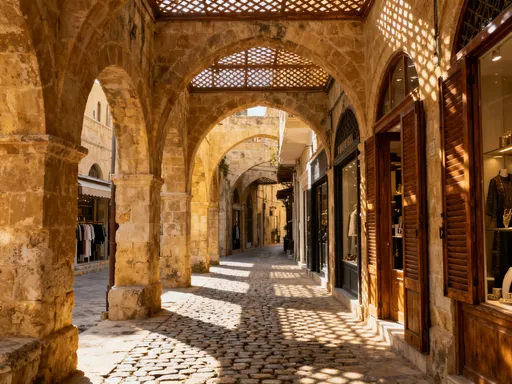
Walking through Nicosia’s winding old streets, I wasn’t just shopping—I was stepping into a living postcard. Colorful shutters frame centuries-old arches, while boutiques hide behind stone walls that whisper stories of the past. The blend of Ottoman, Venetian, and Byzantine architecture doesn’t just impress—it transforms every stroll into a discovery. Here, shopping isn’t transactional; it’s sensory, layered with history, light, and local soul. This is not just retail—it’s urban poetry in motion. Each turn reveals a new tableau: a sun-dappled courtyard, a hand-carved doorway, the soft chime of a bell above a hidden shop. In Nicosia, commerce and culture are not separate threads but woven into a single, vibrant fabric. This is what makes shopping here unlike anywhere else in the world.
The Heartbeat of a Divided Capital
Nicosia holds a rare distinction: it is the last divided capital city in the world. Since the mid-20th century, the island of Cyprus has been separated between its southern Greek Cypriot and northern Turkish Cypriot communities, with Nicosia split by a United Nations buffer zone known as the Green Line. While political division has brought challenges, it has also had an unexpected side effect—preserving the city’s architectural heritage in remarkable ways. Unlike many European capitals that modernized rapidly after the war, Nicosia’s old town escaped large-scale redevelopment. The result is an urban landscape frozen in layers, where each era has left its mark without erasing the one before.
This coexistence of histories is not merely visible—it is felt. As visitors walk through the old city, they move through centuries without realizing it. A Byzantine church stands quietly beside an Ottoman-era bathhouse; Venetian walls encircle neighborhoods where neoclassical homes still bear family crests from the 1800s. The division did not destroy these elements—it shielded them. Because large infrastructure projects were paused and urban sprawl slowed, the historic core remained intact. This preservation, born of circumstance, has given Nicosia a rare authenticity that cannot be replicated by restoration alone.
For shoppers, this means every purchase is made within a context far deeper than aesthetics. Buying a hand-thrown ceramic bowl or a locally woven scarf isn’t just about acquiring an object—it’s about participating in a continuum. The streets themselves become storytellers, guiding visitors through a narrative of resilience, adaptation, and quiet endurance. There is no forced nostalgia here, no theme-park imitation of the past. Instead, history lives in the texture of the walls, the slope of the cobblestones, and the way sunlight falls across a centuries-old archway. In this environment, shopping becomes something more reflective, more meaningful—a dialogue between the present and the long arc of time.
Leventis Building to Laiki Payiotissa: Architecture That Invites Exploration
One of the most striking introductions to Nicosia’s architectural soul is the Leventis Municipal Museum, housed in a meticulously restored 19th-century building near the heart of the old city. Once a private residence, then a school, and now a cultural landmark, the building itself tells a story of transformation. Its neoclassical façade, with symmetrical windows and delicate stonework, sets the tone for the surrounding streets, where shopping unfolds not in glass-fronted malls but within historic structures reborn. From here, a short walk leads toward Laiki Payiotissa Church, where narrow lanes open into small plazas lined with artisan shops, each embedded in buildings that have stood for generations.
What makes these shopping experiences so distinctive is the absence of artificial staging. Unlike curated heritage zones in other cities, Nicosia’s old town feels lived-in, organic. The arched doorways are not museum pieces—they are entrances to working studios. Wooden balconies, some overgrown with climbing jasmine, belong to families who have lived here for decades. Stone masonry, worn smooth by time, forms the walls of boutiques selling handmade soaps, embroidered linens, or olive wood carvings. There is no attempt to ‘theme’ the district; instead, authenticity emerges naturally from the continuity of use. These buildings were never abandoned—they simply evolved.
This seamless integration of commerce and heritage creates a rare kind of retail environment. Shoppers do not feel like tourists passing through a historical exhibit. They are guests in a living neighborhood, where daily life and cultural memory coexist. A visit to a small perfumery tucked into a converted 18th-century home feels intimate, almost personal. The owner might explain how the scent blends are inspired by local herbs—thyme from the Troodos Mountains, wild marjoram from the foothills. The space itself enhances the experience: cool stone floors, a ceiling with exposed wooden beams, and a single shaft of light falling across a display of amber-colored bottles. Architecture here does not merely house the products—it deepens their meaning.
Ledra Street: More Than Just a Pedestrian Zone
Ledra Street is often described as the commercial spine of Nicosia, and for good reason. Stretching from the southern entrance of the old city through the heart of the shopping district, it is lined with international brands, banks, and bustling cafés. At first glance, it might seem like any other urban high street—modern, busy, commercial. But a closer look reveals a different story. Above the storefronts, colonial-era cornices and wrought-iron balconies remain, their details softened by time but still present. Vaulted passageways lead to hidden courtyards, and the pavement slopes gently, following the original contours of the land laid centuries ago.
What makes Ledra Street remarkable is not its retail offerings alone, but how those offerings coexist with history. A global fashion chain operates beneath a façade that retains its original stonework. A modern electronics store shares a building with a centuries-old archway that once served as a city gate. This layering of old and new is not accidental—it reflects a broader philosophy in Nicosia’s urban planning. Rather than choosing between preservation and progress, the city has sought to integrate them. The result is a streetscape that feels dynamic but not disposable, modern but not impersonal.
For visitors, this means the shopping experience here avoids the monotony of generic city centers. There is no sense of placelessness. Even in the busiest sections of Ledra Street, the past is never far away. A pause at a sidewalk café offers more than coffee—it offers a view of a baroque church spire rising above rooftop solar panels. A child’s laughter echoes under a stone arcade that once sheltered merchants in the Ottoman era. These contrasts do not clash; they converse. They remind shoppers that cities are not static, but evolving entities, shaped by both memory and momentum. In Nicosia, commerce does not erase history—it walks beside it.
Hidden Courtyards and Secret Shops: Finding Authenticity Off the Main Path
While Ledra Street draws the crowds, the true magic of Nicosia’s shopping culture lies in its quieter corners—narrow lanes that branch off the main thoroughfares, leading to hidden courtyards and repurposed homes. These are the spaces where independent designers, ceramicists, and bookbinders have set up shop, often in buildings that have stood for over two centuries. To find them requires curiosity and a willingness to wander without a map. But for those who do, the rewards are profound: a sense of discovery, a connection to craftsmanship, and the quiet joy of stumbling upon something unexpected.
One such find might be a textile studio tucked behind an unmarked wooden door. Inside, a courtyard shaded by a fig tree opens to reveal racks of handwoven fabrics—cotton dyed with natural pigments, wool embroidered with traditional Cypriot motifs. The owner, a third-generation weaver, works at a loom in the corner, her hands moving with practiced ease. The building, originally a merchant’s home, retains its central atrium, where light filters down from a glass roof, illuminating dust motes and threads alike. There is no signage, no online store—just word of mouth and the occasional note taped to the door. This is retail as relationship, not algorithm.
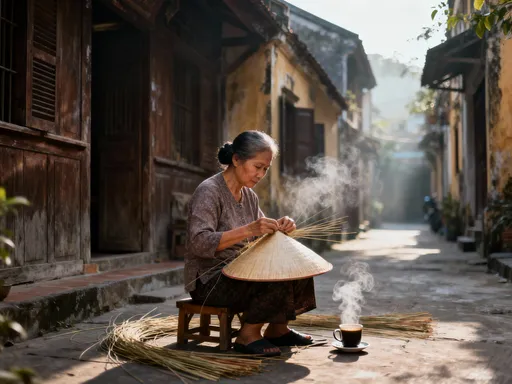
Other hidden shops include a bookbindery where antique volumes are restored using traditional techniques, and a ceramicist’s studio where every piece is fired in a small kiln in the backyard. These spaces are not designed for mass appeal. They are intimate, personal, and deeply rooted in place. The architecture enhances their character: thick walls keep interiors cool, vaulted ceilings absorb sound, and original doorframes bear the marks of centuries of use. To shop here is not to browse—it is to engage. Questions are welcomed, stories are shared, and time slows. In a world of instant gratification, these courtyards offer something rare: a sense of continuity, of craft, of human presence.
Craft Markets and Urban Renewal: Where Tradition Meets Revival
Seasonal craft markets have become a vital part of Nicosia’s cultural revival, transforming underused spaces into vibrant hubs of creativity. Held in restored buildings, abandoned warehouses, or repurposed municipal halls, these markets showcase local artisans—jewelers working with Cypriot copper, potters shaping clay from local deposits, bakers offering honey-drenched pastries made from century-old recipes. What sets these markets apart is not just the quality of the goods, but the context in which they are presented. A weekend market might take place in a former schoolhouse, its chalkboards still faintly visible beneath layers of paint, or in a disused bank building where marble counters now display handmade soaps and candles.
These events are more than shopping opportunities—they are acts of urban reclamation. They demonstrate how historic structures can serve new purposes without losing their identity. The Nicosia Old Town Rehabilitation Project has played a crucial role in this transformation, providing funding and technical support to restore deteriorating buildings and adapt them for contemporary use. By focusing on adaptive reuse rather than demolition, the initiative has helped maintain the city’s architectural integrity while stimulating local economic activity. Empty homes become design studios; forgotten warehouses host pop-up galleries; derelict shops reopen as family-run delis.
The impact extends beyond aesthetics. When a young designer opens a shop in a restored 19th-century house, they are not just launching a business—they are contributing to a broader cultural renewal. They become stewards of the building, caretakers of its history. Customers, in turn, become participants in this revival. Every purchase supports not just an individual artisan but a vision of sustainable urban life—one where the past is not discarded but reimagined. In this way, shopping in Nicosia becomes a quiet form of civic engagement, a way of saying yes to heritage, to community, to continuity.
Sensory Layers: How Light, Sound, and Stone Shape the Shopping Mood
The shopping experience in Nicosia is not defined solely by what is bought, but by how it feels to be there. It is a full-body experience, shaped by the interplay of light, sound, texture, and scent. In the early morning, sunlight slants through latticework shutters, casting delicate patterns on cobblestone alleys. By midday, the heat rises, but beneath the vaulted arcades, the air remains cool and still. Footsteps echo softly against stone walls, mingling with the distant call to prayer from a mosque, the chime of a church bell, or the murmur of conversation from an open café window.
The materials of the city amplify these sensations. Limestone walls absorb and release heat slowly, creating microclimates within the urban fabric. Wooden doors, aged to a silvery gray, creak open to reveal interiors scented with beeswax, dried herbs, or freshly ground coffee. Even the air carries a distinct quality—dry, sun-warmed, faintly perfumed by bougainvillea spilling over courtyard walls. These sensory details are not incidental; they are rooted in centuries of architectural design, developed to suit the Mediterranean climate and way of life.
For shoppers, this sensory richness transforms routine errands into moments of presence. Choosing a bar of olive oil soap becomes more than a transaction—it becomes a tactile experience, the smooth curve of the soap in hand, the earthy scent rising from its surface. Sipping mint tea in a shaded courtyard while browsing handmade jewelry turns shopping into a ritual of pause and appreciation. In a world that often prioritizes speed and efficiency, Nicosia offers a different rhythm—one that invites slowness, attention, and connection. The architecture does not merely shelter these moments; it shapes them.
Why This Matters: The Future of Urban Shopping in Historic Cities
Nicosia offers a compelling model for how historic cities can balance preservation with vitality. In an era when many urban centers struggle with homogenization—where global chains replace local businesses and glass towers overshadow old neighborhoods—the Cypriot capital demonstrates that another path is possible. By integrating commerce into its historic fabric rather than displacing it, Nicosia shows that heritage and modernity need not be at odds. Instead, they can enrich each other, creating urban environments that are both functional and meaningful.
The lessons extend beyond architecture. When shopping is rooted in place—when it takes place in buildings with history, among people with stories, within streets that have witnessed centuries—it becomes more than consumption. It becomes cultural exchange. It fosters pride among residents and deepens understanding among visitors. It supports local economies in ways that are sustainable and human-scaled. And it reminds us that cities are not just containers for economic activity, but living repositories of memory, identity, and shared experience.
As more cities grapple with questions of authenticity, sustainability, and community, Nicosia’s approach offers quiet inspiration. It does not rely on grand gestures or massive investments. Instead, it grows from small acts of care—restoring a doorway, opening a courtyard shop, hosting a weekend market. These actions, repeated over time, create a city that feels whole, coherent, alive. Shopping here is not an escape from the everyday—it is a way of being within it, fully and thoughtfully. In Nicosia, every purchase carries a whisper of the past and a hope for the future. And that, perhaps, is the most valuable thing of all.